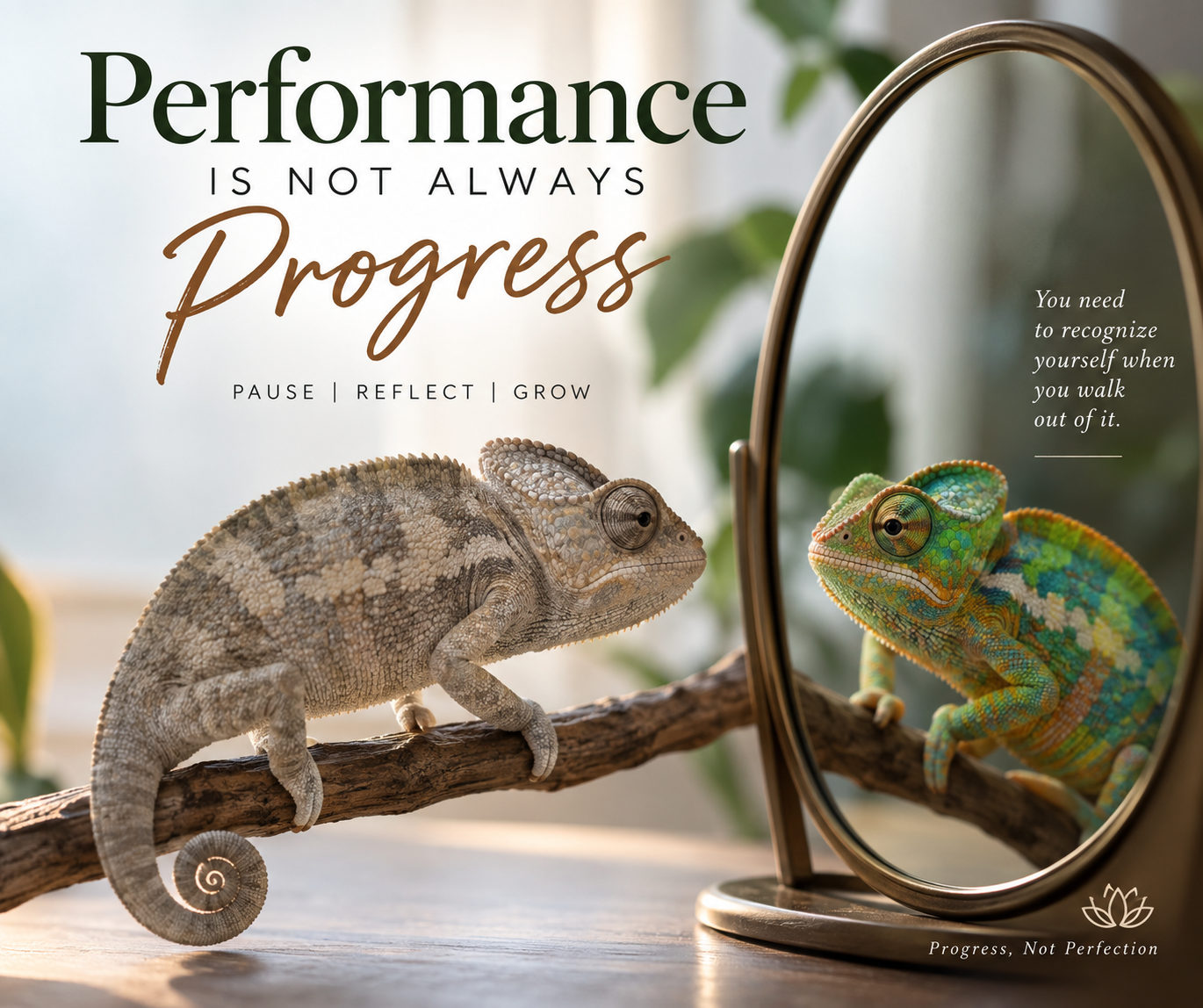
We often use what we can see as evidence of how well we’re doing. We showed up. We handled the situation. We met the deadline. We took care of everybody who needed us. From the outside looking in, everything appears to be moving right along.
I’ve learned, though, that performance is not always progress.
I learned that by looking at my own life. I wasn’t just good at performing—I was a chameleon. I could walk into a room, read the situation and figure out pretty quickly who I needed to be. At work, I knew how to perform at work. At home, I could adjust. Change the people, expectations or environment, and I could change right along with them.
For a long time, I considered that one of my strengths, and in some ways it was. Being adaptable helped me navigate difficult situations and keep moving when life wasn’t particularly easy. I could show up, handle things and maintain what needed to be maintained.
What took me longer to recognize was that I could be performing well without actually making progress. Sometimes I could even give the appearance that I was handling a situation when the truth was, I hadn’t taken the time to discover what I really needed to address.
That’s one of the things being a chameleon allowed me to do. I could adjust to the situation in front of me and keep moving. From the outside, that could look like progress. Sometimes it was. Other times, I was simply getting better at adapting without ever stopping long enough to ask myself what was happening underneath all that adapting.
Eventually I had to ask a different question:
Am I really making progress, or am I performing well enough to look like I am?
Answering that question required a major internal investigation. And once I started looking honestly at what was happening underneath the surface, I discovered there were some places in my life that needed more than a little touch-up. I had some internal remodeling and reconstructing to do.
That’s the thing about an internal investigation: you don’t always know what you’re going to find when you start looking. I had to examine some patterns, question some things I’d accepted about myself and recognize where adapting had served me—and where it no longer did.
That didn’t happen overnight, and it certainly didn’t mean everything I’d been doing was wrong. Some of those skills had helped me navigate life. Maintain is the M in my EMBRACE Model™ for a reason. Part of growth is recognizing what you’re already doing right while becoming willing to look honestly at what may need to change.
Maybe being a chameleon isn’t your story. Maybe your performance looks completely different. You might be the dependable person who always says yes, the employee who never misses a beat, the person everyone describes as “strong,” or the one who’s become so good at saying “I’m fine” that people believe you.
So here’s something to consider:
Where are you performing well, and where are you genuinely progressing?
The two aren’t necessarily opposites. You may be doing some of both. The invitation is simply to pause long enough to recognize the difference.
I’ve spent enough years being a chameleon to know that changing colors can help you navigate a room. I’ve also lived long enough to understand that eventually, you need to recognize yourself when you walk out of it.
You don’t have to remodel the whole house today. Maybe you simply need to walk through it, turn on the lights and notice what deserves your attention.
That’s where progress can begin.
Progress, not perfection or performance.
Jan.
🪷 Beside You On The Journey 🪷
If this gave you something to think about, consider sharing it with someone who’s gotten really good at “handling things.”
Sometimes one honest question becomes a doorway. 🪷